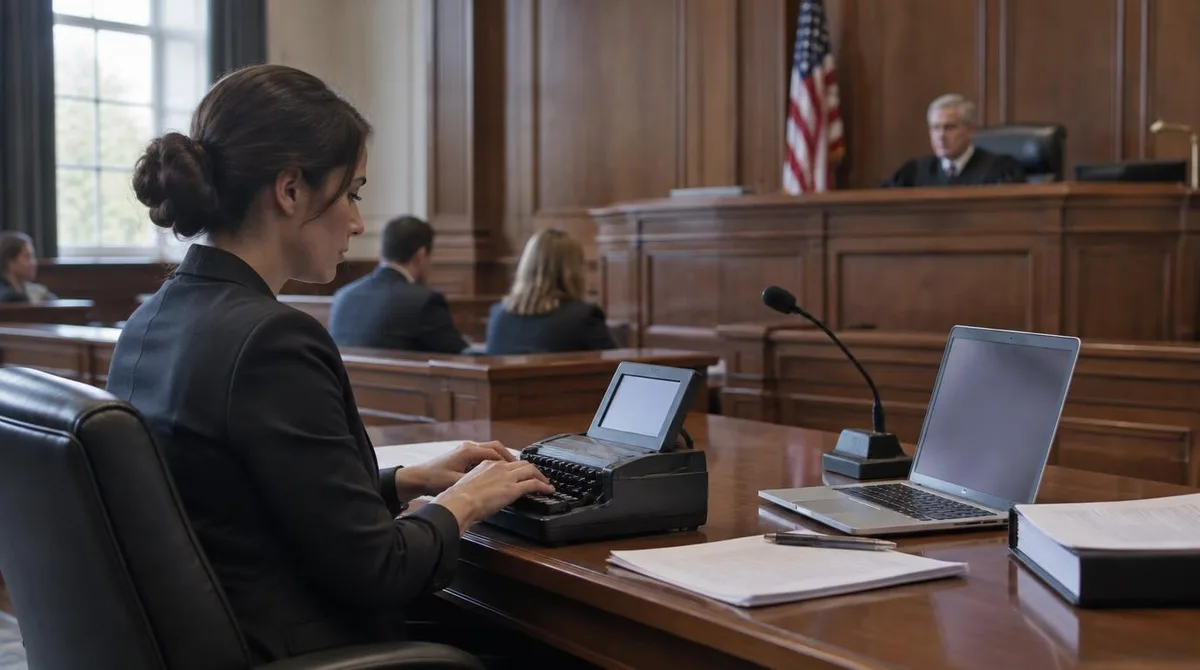
A Supreme Court ruling is the last step of a long, printed process: a petition filed by lawyers, a private vote among the justices, an argument capped at 30 minutes a side, and a written opinion. The workload is documented on the Court's own pages. Roughly 7,000 to 8,000 petitions arrive each Term, and the Court hears argument in about 80 of them.
Those choices reach into policy disputes far from the courtroom, including the cash-transfer debate laid out in the documented arguments both ways, a companion explainer on universal basic income.
Plain-language explainers on the courts keep the rest of the machinery in view, and this article follows one case from filing to opinion.
How a case reaches the Court
Summaries of how the supreme court works usually start with the size of the docket, and the numbers justify it. Nearly every case arrives as a petition for a writ of certiorari, a request that the Court review a judgment from a lower court. Each Term brings roughly 7,000 to 8,000 petitions, about 80 draw oral argument, and the justices evaluate approximately 130 petitions a week, according to pages the Court maintains about its own work. On Fridays, during and before argument weeks, the justices meet privately to discuss pending cases and to vote on which petitions to accept. A quorum of six is required to decide a case, the Court's public answers state. The Court also notes that the Judiciary Act of 1869 fixed the bench at nine members. Most petitions fail, which is the system working as designed: the Court picks the conflicts it must settle.
What happens at oral argument
Argument weeks follow a fixed rhythm. The Term begins by statute on the first Monday in October and usually runs until late June or early July, split into sittings for hearing cases and recesses for writing opinions, alternating at roughly two-week intervals, as the Court's procedures page records. Each side gets 30 minutes to argue, with rare exceptions, and the Court generally hears two arguments a day. There is no jury and no witnesses; the justices work from the record of prior proceedings and from printed briefs. Public sessions begin at 10 a.m., typically on Mondays, Tuesdays, and Wednesdays. The format leaves little room, so a lawyer's preparation shows within minutes.
How the justices vote and write
Decision work happens out of public sight. During the recess periods between sittings, the justices study the argued cases and work on their opinions, and on Fridays they meet privately to discuss the cases argued and to vote on pending petitions. The Court's published description stops at the conference door, so the opinions that emerge are the visible record of how each justice landed. A quorum of six justices is required to decide a case, as the Court states in its public answers. The seat work continues between arguments: each justice handles emergency applications for one or more of the 13 federal circuits, where the Court's account notes a justice may be asked to halt a circuit order, set bond, or act on a stay application. Readers following this should also see Discovery in criminal cases: what the prosecution must hand over, and when.
Who sits on the Court and for how long
The nine seats change slowly. The Judiciary Act of 1869 fixed the number at nine, and no later change has occurred, as the Court's public answers record. Filling a seat runs through the constitutional branches: the President nominates a person for a vacancy, and the Senate votes to confirm by simple majority, which gives both branches a voice in the Court's makeup. The Constitution sets no qualifications for the job, and the Court says so directly. Justices then hold office during good Behaviour, the Article 3 phrase that has meant, in practice, service for life.
Conclusion: a process built for the record
The path from petition to opinion is deliberately narrow. Thousands ask, few are chosen, and the ones chosen run through argument, conference, and written opinions that anyone can read. The Court keeps the details of that path on its own pages, from the first Monday in October to the 30-minute clock. For a person following a case, the honest guide is procedural: the docket shows where a case stands, and the opinions show how it ended. We covered a connected angle in The EEOC charge process: your discrimination claim's first 180 days.