The Federal Reserve is the central bank of the United States. It sets short-term interest rates and supervises large banks. When banks need cash in a squeeze, it can lend. It does not set taxes and does not pass the federal budget. Congress created the bank on December 23, 1913, when President Woodrow Wilson signed the Federal Reserve Act into law.
Its own question-and-answer page describes a system that Congress built to give the country a more stable monetary and financial system. Borrowing costs are only half of a household ledger; the paycheck deductions guide covers the tax side of the same money. Other plain-language guides sit on the explainers desk.
What is the Federal Reserve?
The Federal Reserve Act made the system a creation of Congress, not a company and not a cabinet department. A Federal Reserve FAQ lists four areas of work, and the list is narrow by design:
- monetary policy, aimed at full employment and stable prices
- supervision and regulation of banks and other large financial institutions
- work to keep the financial system stable and to contain systemic risk
- payment and financial services for the government and for banks
Nothing on that list mentions elections or campaigns.
What can the Federal Reserve actually do?
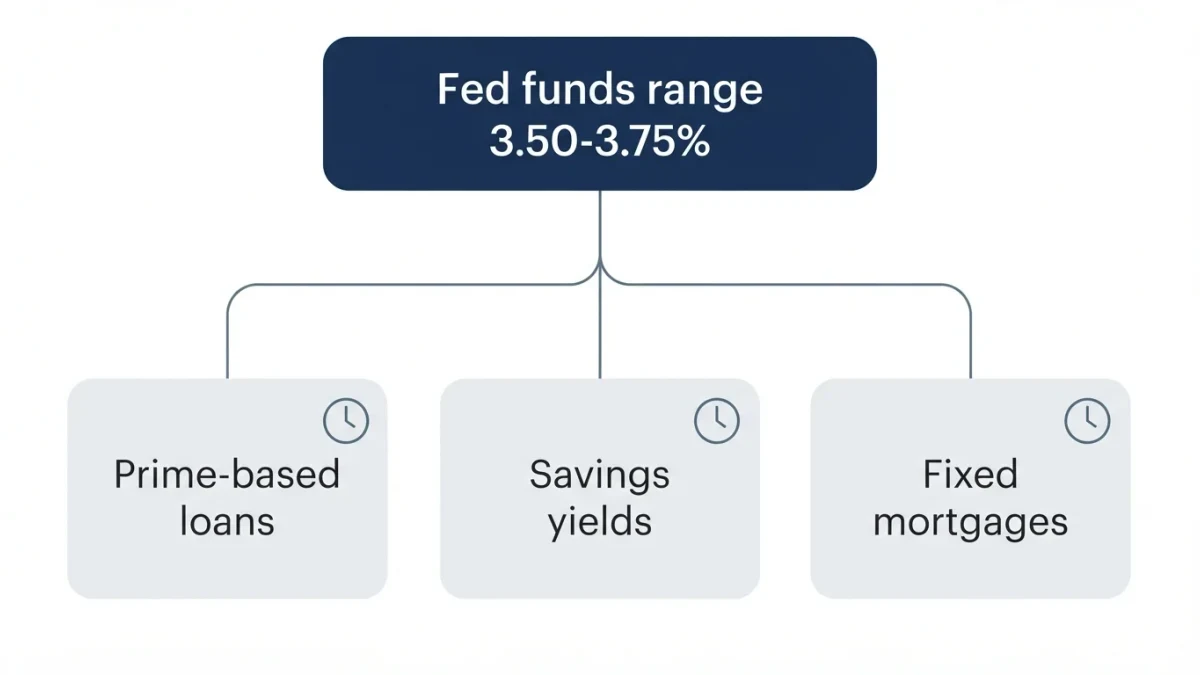
Its policy power runs through three tools. The Fed's description of its rate-setting committee names them: open market operations, the discount rate, and reserve requirements. The first tool moves the federal funds rate, which the Fed defines as the rate banks charge each other for overnight loans of reserves. The three tools act on the balances banks hold at the Reserve Banks, and moving that supply alters the federal funds rate, in the Fed's own description. A lower rate makes borrowing cheaper across the economy, and a higher rate makes credit dearer. This connects to our earlier piece, ICE detainers explained: what a hold actually is, and isn't.
Twelve people vote on that policy: the seven governors and five Reserve Bank presidents, one of them always the New York Fed's chief, according to the Fed page on the committee, last updated October 7, 2026. The group holds eight regularly scheduled meetings per year. Rate decisions come from that room, not from the White House and not from Congress.
What is the dual mandate in law?
The goals are written in statute. A 1977 amendment to the Federal Reserve Act, now codified at 12 U.S.C. 225a, directs the Board of Governors and the committee to promote the goals of maximum employment, stable prices, and moderate long-term interest rates. The pairing of the first two is widely known as the dual mandate. The wording matters in practice, because the statute fixes the assignment and leaves the Fed to choose the tools.
What stays outside the Fed's reach?
Taxes and spending belong to Congress, and the Fed's own list of jobs does not include either one. The central bank can change the price of credit; it cannot order anyone to spend or to hire. Its fourth listed job is service work, moving money between banks and for the government. Its independence is also bounded by the same statute that grants it. Congress wrote the mandate in 1977, and a later Congress could rewrite it. The record of that boundary is public: the statute sits in the United States Code, and the committee publishes a statement after every meeting. For related coverage, see Unemployment Rate Explained — Unemployment Numbers Explained: Reading the Jobs Report.
Conclusion: A mandate written by Congress
The Federal Reserve holds real power over money and credit, and its decisions land in public view eight times a year. The limits are just as real. The statute gives the bank its goals and its tools, and Congress keeps the pen. A reader who wants to know what the Fed can do next can start with the law it works under, then read the statements the committee publishes after each decision.