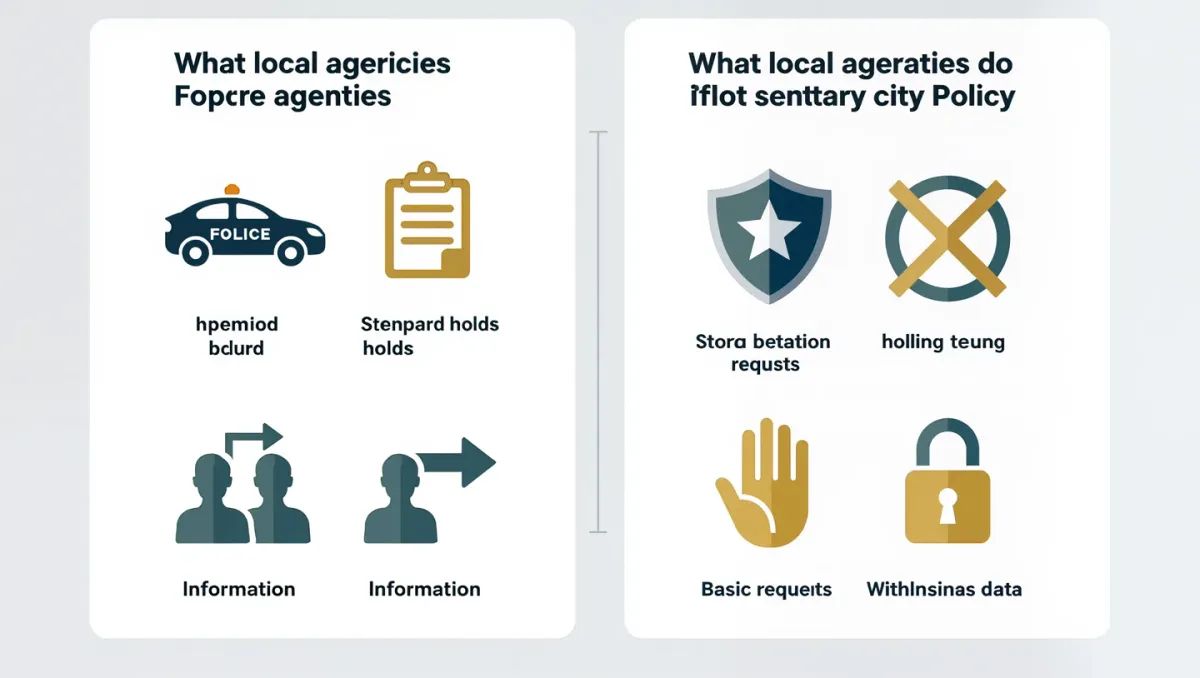
An immigration detainer is a request from Immigration and Customs Enforcement asking a local jail to hold a person for up to 48 hours beyond their scheduled release, so ICE can decide whether to take custody and pursue removal. It is not a warrant, not signed by a judge, and — under the federal appeals courts that have ruled on the question — frequently not supported by probable cause of removability at the moment it issues. Detainer volume scales with local cooperation: per ICE's own detainer statistics, hundreds of thousands have issued in recent years, concentrated in jurisdictions that honor them automatically, while states and cities limiting cooperation receive none in their jails.
What is the legal basis for a hold?
The Fourth Amendment, mostly — which is why detainers became a litigation genre. Federal regulations describe ICE's authority to issue detainers under section 287.7, but the courts that examined holds past release dates found them to be new arrests requiring constitutional justification. The Third Circuit's Galarza v. Szalczyk (2014) held that local agencies are not obliged to honor detainers and can be liable if they do so wrongly; other circuits, including the Ninth, reached similar conclusions on probable-cause grounds. The doctrinal core problem is the database: ICE issues detainers based on records that the agency's own audits have shown produce mistaken identities and citizenship errors, and U.S. citizens and lawful residents have been held — a population whose lawsuits produced most of the governing case law.
What about detainers for people never convicted of anything?
Enforcement practice has cycled. Prioritization memos in earlier administrations directed detainers toward serious-criminal convictions; the removal of those priorities in 2025, with executive orders directing enforcement against any removable person, widened detainer use back toward arrestees at booking — including traffic stops, and, in a recurring pattern documented by litigation and reporting, crime victims and witnesses. The mechanism is the same at any priority level: the hold attaches to whatever criminal custody exists, extending it. For people bailable on the criminal case, a detainer can effectively eliminate bail, since release triggers the transfer instead.
What did the courts say about damages?
Two lines of decisions matter. Against ICE itself, the Second and Ninth Circuits split on sovereign-immunity and Bivens grounds, with the Supreme Court declining to resolve whether Bivens remedies exist for immigration detention. Against localities, Galarza and its followers established that honoring a detainer is a choice, and several counties paid settlements — Lehigh County in the Galarza case itself, and others in the Seventh and Ninth Circuits — after holds on people released without charges. Those liability lessons reshaped policy: many county counsels advised honoring detainers only with a judicial warrant or probable-cause finding, the origin of the warrant-check policies now common in cooperative jurisdictions as well.
What are sanctuary policies, legally?
The term covers state and local limits on using resources for federal immigration enforcement — refusing holds without warrants, restricting notification of release dates, limiting booking-question cooperation. The authority question is settled in one direction: the Tenth Amendment's anti-commandeering rule, reaffirmed by the Supreme Court in the sanctuary-funding cases, means the federal government cannot conscript local officers or punish broad refusals by withholding unrelated funds, though targeted conditions tied to notice compliance have survived in some litigation. Federal responses have included notification-only detainer forms, the 287(g) delegation agreements under which local officers act under ICE supervision, and, in recent practice, civil subpoenas to force release-date disclosure — the current legal frontier.
What happens to the person held?
Transfer starts removal proceedings, with detention governed by the immigration system's own rules: mandatory detention categories, bond eligibility for others, and the jurisdiction strips that decide which federal court reviews a case. People arrested on criminal charges they are beating face the familiar fork — the criminal case resolves with dismissal while the immigration hold ensures custody continues into a different system with different rights, no appointed counsel, and a different clock. For families and advocates, the practical sequence runs through the jail: learning of the detainer at booking is the moment any intervention — counsel, proof of status, a warrant check — still happens before the 48 hours run.