Plain accounts of how a system operates: who decides, on what evidence, within what deadline, and what recourse follows a refusal. Topics run from immigration procedure to complaints against public bodies. Intended for people navigating a process themselves and for reporters who need the mechanics straight.
A detainer is a request, not a warrant — it asks a jail to hold someone past their release date, and the courts have spent a decade deciding who pays when the request was wrong.
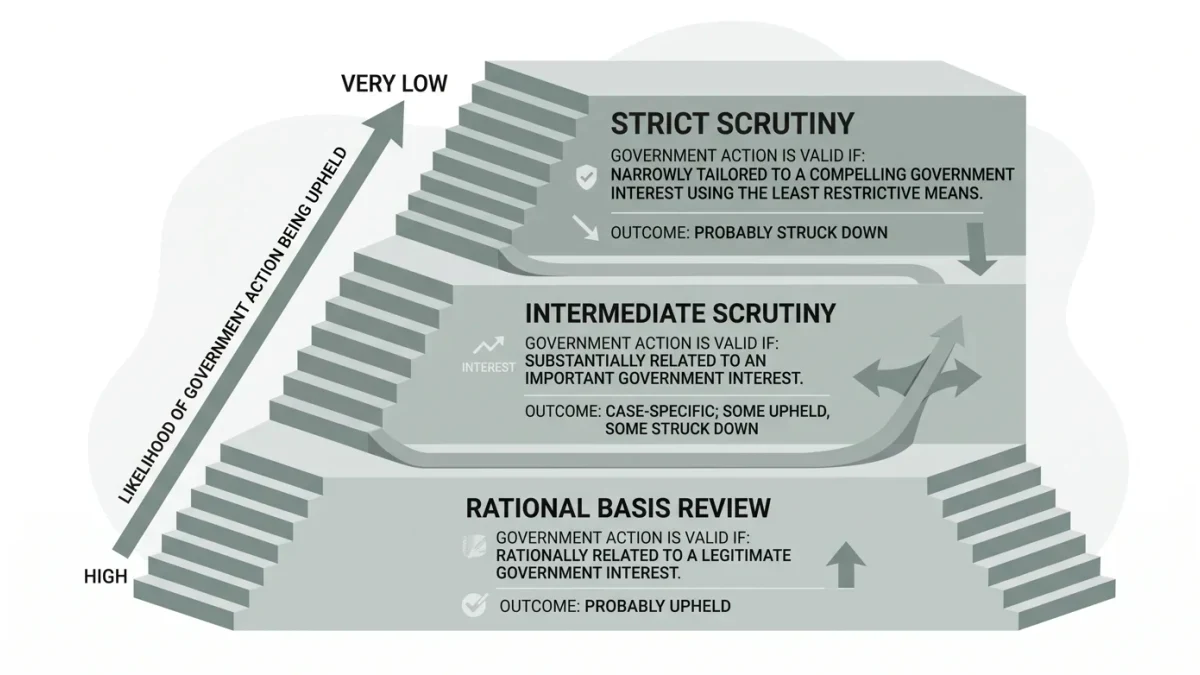
The Fourteenth Amendment's one-sentence promise runs on tiers of scrutiny, and which tier applies — strict, intermediate, or rational basis — usually decides the case before it is argued.
Class certification is the whole ballgame: one ruling on whether a case can proceed for everyone decides whether institutional change happens or each claim dies alone.
The famous warnings protect statements from use at trial — and almost nothing else: no right to a lawyer present during questioning, no suit for damages, no stop to the interrogation.
The Americans with Disabilities Act covers people behind bars, and federal settlements show what that means in practice: interpreters, medication, accessible cells, and program access.