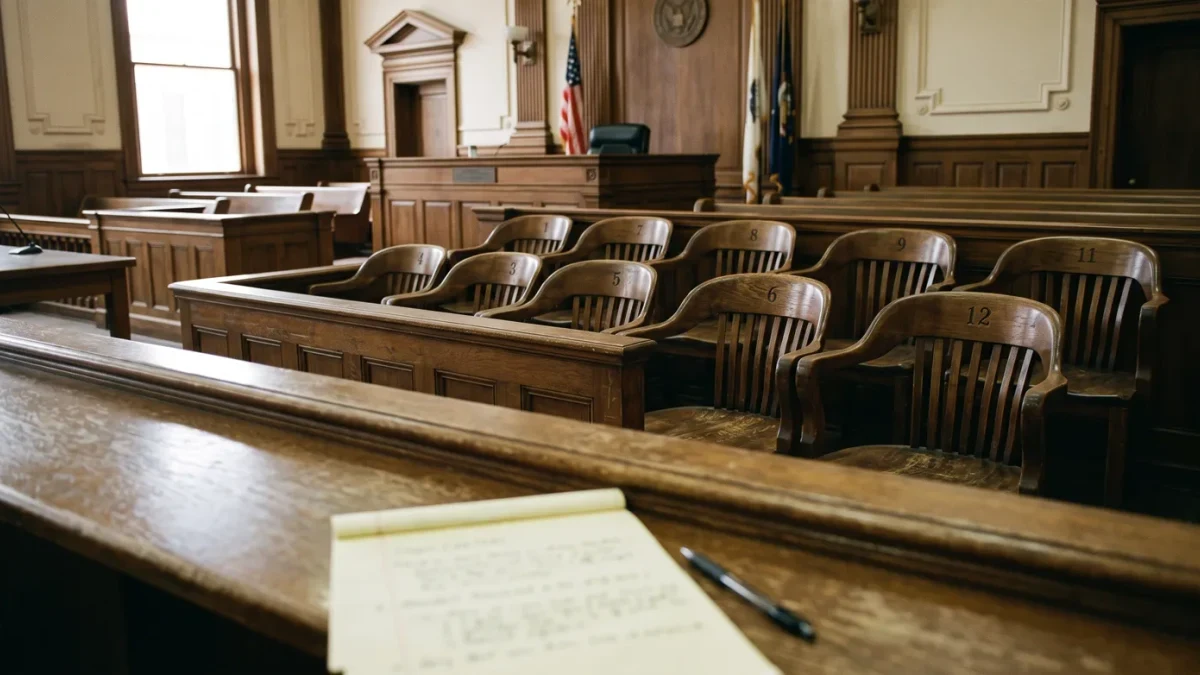
Juries are chosen in two stages: voir dire, the questioning that screens for bias and hardship, and strikes — challenges for cause, which require a reason the judge accepts, and peremptory challenges, which historically required no reason at all. Since Batson v. Kentucky (1986), using a peremptory strike on the basis of race is unconstitutional, and J.E.B. v. Alabama ex rel. T.B. (1994) extended the rule to sex. The mechanics sound clean; the empirical record, from the Equal Justice Initiative's county studies through modern analyses of strike data in capital and drug cases, shows the problem the rule was written for persists in subtler dress — reasons that are race-correlated and accepted anyway.
How does voir dire work?
Jurors complete questionnaires and answer questions from the judge and attorneys about their exposure to the case, their experiences, and their ability to follow the law. The parties may challenge for cause, without limit, when bias is shown — a standard judges apply expansively in death-penalty questioning, where any substantial doubt about following the law disqualifies. Peremptories are the scarce resource: typically a handful per side, spendable on any juror, for any reason short of a protected classification. The strategic exchange — cause challenges narrowing the pool, peremptories trimming the remainder — is what produces the twelve people who will hear the evidence.
What does a Batson challenge require?
Three steps. The objector makes a prima facie showing that a strike was racially motivated — often from the pattern of strikes or the questioning that preceded it. The striking party then offers a race-neutral explanation, which must be more than a denial but need not be persuasive or even plausible; per Purkett v. Elem (1995), the explanation's credibility is weighed only at the third step, when the judge decides whether the objector proved purposeful discrimination. The burden stays with the objector throughout. That structure, commentators and the Court's own later opinions have acknowledged, lets a facially neutral reason do the work — demeanor, hesitation, a relative's arrest — reasons that appellate review, which cannot see the juror, almost never disturbs.
What do the data show?
Consistent racial asymmetry in strikes. Studies of strike patterns in North Carolina's capital cases — litigation that produced the state's Racial Justice Act and its repeal — documented prosecutors striking Black jurors at several times the rate of others, with accepted race-neutral explanations attached; studies in other jurisdictions, including analyses of felony strikes in Louisiana and Philadelphia's capital history, found similar ratios. On the other side, defense strikes of white jurors have drawn Batson rulings too, including in the Curtis Flowers retrials, where the Supreme Court in 2019 — Flowers v. Mississippi — found a prosecutor's history of striking Black jurors across six trials unconstitutional in the aggregate. The systemic finding is old: the exclusion of Black citizens from juries was among the practices the Reconstruction amendments targeted, and jury commissions in the South kept it explicit until Strauder (1880) and Smith v. Texas (1940) struck the openly administered versions.
What reforms are states trying?
The main one is abolishing or shrinking peremptories: Arizona became the first state to eliminate them entirely, in 2022, forcing all strikes onto the for-cause record, and several other states have debated or studied the step. Alternatives in the literature and some courts: requiring strikes in writing with sworn reasons, blind strikes, and expanded use of the Washington-state rule — adopted in Washington and a few other states — that asks not whether the reason was race-based but whether an objective observer could view it as racially motivated, plus consideration of disparities the strike contributes to. Evaluations of these approaches are early; the design problem all of them address is the same, that unreviewable discretion plus a legacy of racialized tropes equals predictable disparity.
What can a stricken juror or defendant do?
The juror, in most jurisdictions, nothing — struck jurors are not parties. The defendant's remedy is the objection itself, preserved on the record for appeal, and re-trying the suppression question at the third step with pattern evidence, which is what won Flowers. The practical advice trial lawyers give each other is arithmetic: count the strikes by group, request the reasons on the record, and compare explanations across jurors who stayed — because the disparity between the reason given for the struck juror and the accepted juror with the same attribute is the evidence Batson's third step was built to hear.