Labor unions today represent about one in ten American wage and salary workers, but the headline number hides two very different stories. Public-sector workers are unionized at 32.9 percent. Private-sector workers sit at 5.9 percent, and that gap is where most new organizing attention is pointed.
The legal right to organize has not changed since 1935. What has changed is which workplaces are trying to use it. Service workers and, more recently, tech workers have become the focus of organizing efforts, and the practical question for any worker considering it is the same: what does the law protect, what can a union actually win, and what does the process cost you?
This piece walks through the membership data, the legal mechanics, and the realistic outcomes. It draws on federal data and guidance from the Department of Labor, and it treats organizing as a decision with options and tradeoffs, not a slogan. If you want the broader policy context, our rights-news coverage tracks how enforcement and legislation interact.
What is a labor union, exactly?
A labor union is a group of two or more employees who join together to advance common interests such as wages, benefits, schedules and other terms of employment. That is the Department of Labor's definition, and the mechanism behind it is collective bargaining: workers, through their union, negotiate a written contract with the employer called a collective bargaining agreement. The agreement is legally enforceable.
Unions are membership-driven, democratic organizations. Federal law requires financial transparency, fair elections and fair representation of all workers in the unit. Beyond the contract itself, the Department of Labor notes that workers can pursue things like flexible scheduling, protections against harassment and safer conditions — improvements that do not always show up in wage statistics but do show up in how a job feels day to day.
How many workers are union members today?
According to Wikipedia's overview of labor unions in the United States, 14.7 million U.S. wage and salary workers were union members in 2025, or 10.0 percent of the workforce. In 1983, the first year with comparable data, the rate was 20.1 percent and 17.7 million workers were members. So membership has fallen by half as a share of the workforce even as the absolute count declined more slowly.
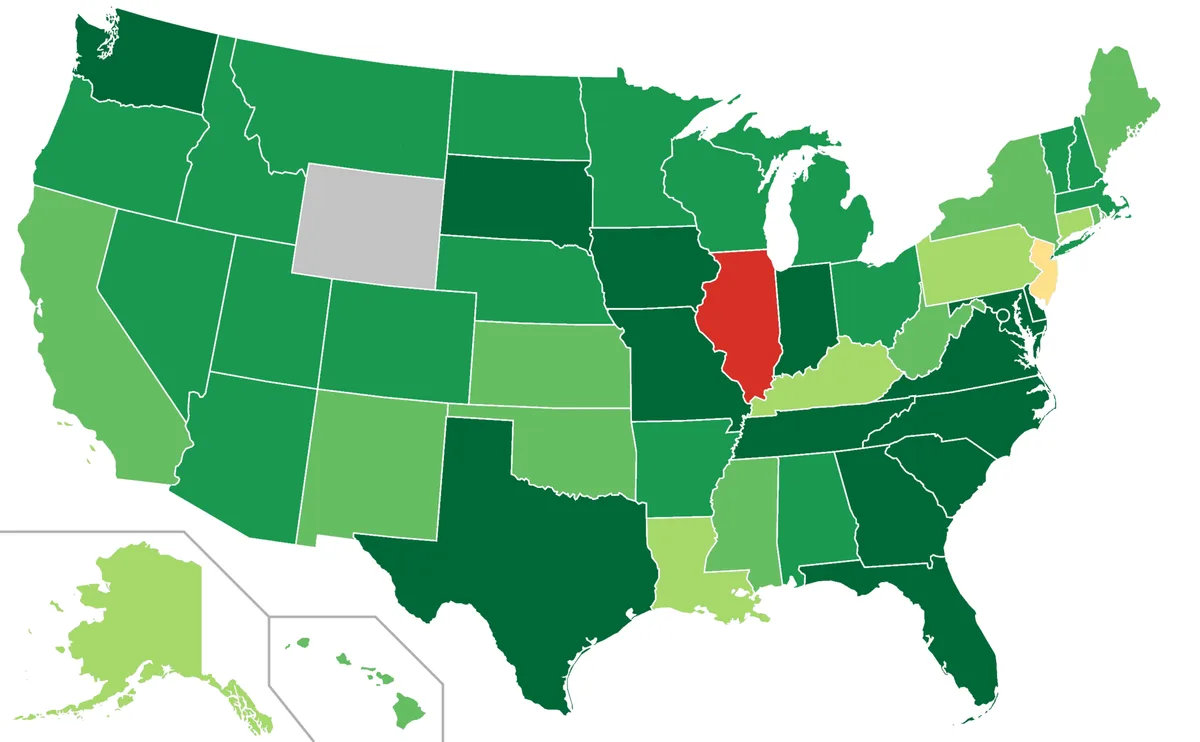
The split matters more than the total. Public-sector unionization stands at 32.9 percent; private-sector unionization at 5.9 percent. That is why the most prominent unions in this century have been among teachers, city employees and other government workers, while private-sector organizing has had to rebuild from a low base.
One data caveat worth knowing: the 2025 annual estimates were built from 11 monthly observations because the October survey was not collected during the federal government shutdown, so that year is not strictly comparable with other annual averages.
Why are service and tech workplaces the new targets?
Our analysis: the arithmetic points there. With private-sector density at 5.9 percent, most private employers have never operated under a union contract, which means the potential universe of new members is enormous. Service work concentrates large numbers of employees at single worksites — hospitals, hotels, warehouses, retail chains — which is historically the setting where organizing succeeds. Tech workplaces add a different mix: highly educated employees who historically had individual bargaining power but increasingly face the same issues of scheduling, job security and management discretion that older organizing drives were built around.
There is also an economic argument that cuts both ways, and honest coverage should state it plainly. Research shows unionized workers earn more than comparable nonunion workers, and that private-sector union strength lifts nonunion wages too — the so-called union spillover effect. Other research finds unions can harm profitability, employment and business growth rates. Workers weighing a drive are weighing both claims, and employers will make the second one explicitly.
What does the law actually protect?
The National Labor Relations Act protects the rights of most private-sector employees to organize, to act together to improve wages and working conditions, to choose a union as their bargaining representative, and to refrain from any of these activities. The protection applies with or without a union: by law, employers cannot fire, discipline, demote or penalize workers for engaging in group action about their working conditions. For related coverage, see Who can enforce the Voting Rights Act is now a question of where you live.
The National Labor Relations Board enforces the law through 48 regional offices. Under Section 8(a) of the Act, it is an unfair labor practice for an employer to interfere with these rights, and once employees have unionized, the employer must bargain in good faith. It is also illegal to retaliate against a worker for filing charges or participating in an NLRB investigation.
Three practical limits are worth naming. First, the NLRA covers most private-sector employees — not railroad and airline workers, federal employees, or many state and local public employees, who are covered by other agencies and state laws. Second, the right to organize carries a mirror-image right to decline to participate and to campaign against a union. Third, the Department of Labor's own guidance flags that the rules carry unstated exceptions and qualifications, so a specific situation may turn on details this overview cannot cover. This article is general information, not legal advice.
How does a workplace actually organize?
The Department of Labor describes a sequence that has held for decades:
- Workers talk with co-workers to build support around shared workplace issues.
- They often form an organizing committee to coordinate.
- They can contact an established union for support and guidance, or organize an independent union on their own.
- Once unionized, the workers and the employer bargain toward a collective bargaining agreement, with free mediation and training available from the Federal Mediation and Conciliation Service.
The same rights apply regardless of immigration status, which matters in service sectors where mixed-status workforces are common. The costs in the process are real, though: organizing takes time, exposes disagreements within the workforce, and draws employer responses that are lawful persuasion on one side of a line and unlawful interference on the other. Where that line sits in a specific case is exactly what the NLRB exists to decide.
What this means for workers deciding whether to organize
The decision reduces to three questions. What is the specific problem — pay, scheduling, safety, harassment — and would a contract plausibly fix it? Who else at the worksite sees it the same way, because two employees is the legal floor but a durable drive needs broad support? And what is the risk tolerance for a process that can take months and may end without a contract?
For readers tracking the wider forces reshaping work, our explainer on AI and the labor market covers which tasks are being absorbed and which skills gain value — a useful companion, since automation risk is one of the background conditions researchers control for when measuring union effects. This connects to our earlier piece, AI and the labor market: which tasks get absorbed, and which skills gain value.
The evidence base here is settled on the mechanics and unsettled on the trajectory. Membership data through 2025 shows continued decline overall, concentrated decline in the private sector, and no federal data yet that captures how the newest service and tech drives will change the 2026 numbers. What the record does establish is the legal floor: the right to act together at work is protected, it is enforceable, and it does not depend on already having a union.