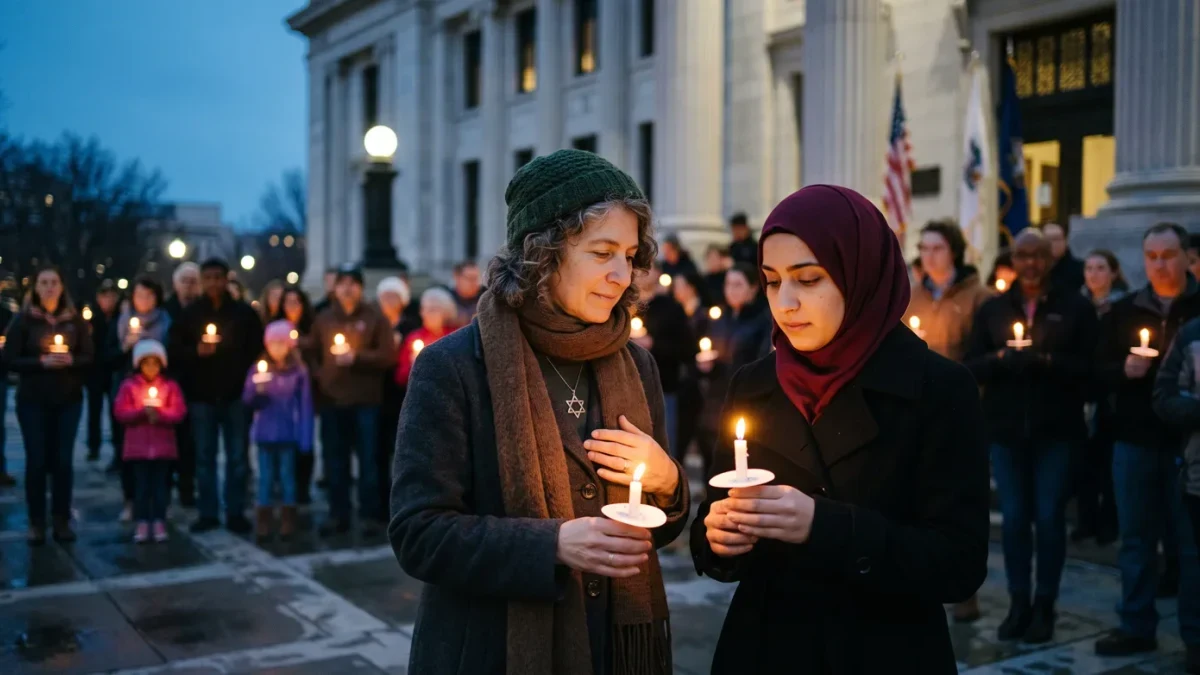
Reported antisemitic incidents in the United States reached record levels in the years following October 7, 2023 — the Anti-Defamation League's audit, the longest-running tracker, counted thousands of incidents in the year after the Hamas attack on Israel, roughly triple its prior-year total, including assaults, vandalism, and harassment; its subsequent annual audits sustained record highs. Islamophobic and anti-Arab incidents rose on a parallel track: the Council on American-Islamic Relations documented a comparable surge in complaints in the same period, including workplace and school discrimination, and the FBI's hate crime statistics recorded increases in both religious categories in the 2023 data published at the end of 2024. The numbers describe a real change in American life — Jewish institutions adding security, Muslim families reporting school incidents — and they arrived into institutions, especially universities, that were unprepared for the conflicts they produced.
Where did the incidents happen?
Per the ADL's and CAIR's category breakdowns, harassment dominates the counts, with vandalism second and physical assaults a small but serious minority. Locations track institutional life: K-12 schools and universities, houses of worship, workplaces, and online spaces — with definitional fights over the online category, since the trackers count doxxing and coordinated harassment campaigns that police data never sees. The campus concentration became its own story: congressional hearings in 2023 and 2024 on university responses to antisemitism and Islamophobia, the resignation of two Ivy League presidents after testimony in December 2023, and the protests, encampments, and disciplinary actions of the 2024 spring term that produced thousands of arrests nationwide and continuing litigation over whether university responses discriminated against either Jewish or pro-Palestinian students — with the Education Department's Office for Civil Rights carrying a docket of complaints from both sides.
Why do the counts differ so much?
Because they count different things. The ADL audit includes incidents of harassment, vandalism, and assault targeting Jewish individuals and institutions, with methodology changes in 2022 that broadened the count to include some forms of anti-Zionist rhetoric, which critics — including researchers who had used the series — argued blurred antisemitism with political speech; ADL defends the change as reflecting how harassment presents. CAIR counts discrimination complaints made to its offices. Police counts, the FBI series, include only crimes reported and labeled by agencies, and its participation gaps make it a floor. Reading the trackers against each other, with their methodologies attached, is the only honest use of the numbers — a practice the trackers themselves, to their credit, increasingly document in published methodology notes.
What did institutions do?
A patchwork, litigated in real time. Universities adopted protest restrictions and antisemitism and Islamophobia policies simultaneously criticized as too weak and too broad, with free-speech organizations documenting restrictions that swept protected political expression; cities and states passed bills defining antisemitism for discrimination-law purposes — most adopting the International Holocaust Remembrance Alliance definition, which states and its own drafters dispute the scope of when applied to political speech — and courts began testing those laws against First Amendment defenses. Security funding rose on both sides: federal nonprofit security grants, which synagogues, mosques, and other institutions compete for, grew through successive appropriations cycles.
What should readers watch?
The methodology notes as much as the totals: which incidents each tracker counts, and how the campus litigation defines the line between protected speech, discriminatory harassment under Title VI, and institutional overreach. The surge's persistence is now measurable across three years of data — the question the numbers cannot answer, and the courts are being asked to, is what a response that respects both safety and speech looks like.