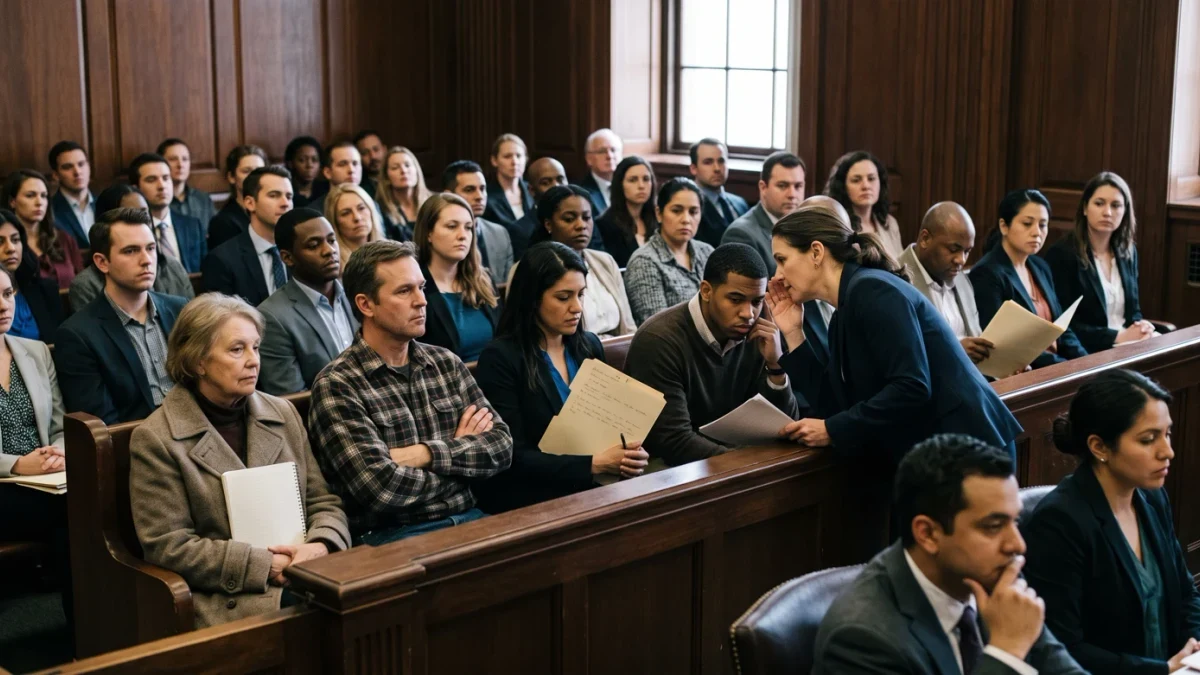
A class action lets one or several plaintiffs sue on behalf of everyone similarly affected — every person strip-searched at a jail under the same policy, every employee subject to the same pay practice — and under Rule 23 of the Federal Rules of Civil Procedure, the case proceeds for all of them only if a judge certifies the class. That single ruling is where civil-rights class actions are won or lost: certification gives defendants a reason to settle institutional reform, and denial reduces the claim to a handful of individual cases worth, in settlement arithmetic, almost nothing.
What does certification require?
Rule 23(a) sets four prerequisites: a class so numerous that joinder is impracticable; common questions of law or fact; the representatives' claims typical of the class; and representatives who will fairly protect the class's interests. Rule 23(b) then requires a fit, and most civil-rights cases proceed under (b)(2), for injunctive relief against conduct applying uniformly to the class — a policy, a practice, a condition. The Supreme Court's decision in Wal-Mart v. Dukes (2011) tightened the commonality requirement, holding that a million employees still could not sue together without a common policy linking their claims — a ruling that reshaped employment-discrimination class practice and pushed plaintiffs toward systemic-policy proof.
What makes civil-rights classes different?
The remedy sought. Money classes under (b)(3) require notice to every member and an opportunity to opt out, with individualized damages an obstacle courts weigh at certification under Comcast (2013). Injunctive classes under (b)(2) — the classic prison-conditions, policing-practice, and benefits-eligibility cases — need no opt-out, because what plaintiffs seek is changed conduct, and members who dislike the result can say so through objectors and the court's duty to protect absent members. That protective architecture is the recurring theme: the named plaintiffs and their lawyers control the litigation, but everyone bound by the judgment relies on the judge and the objector process to police the settlement.
How are settlements policed?
Settlements require court approval, direct notice to class members, an opportunity to object, and a fairness hearing. The persistent controversies are two. Attorney fees, usually calculated as a percentage of the common fund or under the lodestone of billed hours, can dwarf what class members receive in coupon or claims-made settlements — the genre Amazon v. Federal Trade Commission-era scholarship and older studies of coupon deals have criticized for serving lawyers and defendants more than classes. And uninjured class members pose a standing problem the Supreme Court raised in TransUnion v. Ramirez (2021), which trimmed Article III standing for people whose data was misused but who suffered no concrete harm, making certification harder in data-privacy and no-injury cases.
What are consent decrees doing here?
Civil-rights class settlements often become consent decrees: court orders embedding injunctive relief — reformed search policies, revised eligibility rules, monitoring — with continuing jurisdiction to enforce. The combination explains the genre's power and its fragility. Power, because one certified class can change a policy for everyone it touched, and under Frew v. Hawkins (2004) the decrees bind state officials who successors cannot simply walk away from. Fragility, because defendants have learned to argue that changed circumstances or materially changed operations dissolve the obligation, an argument the Supreme Court entertained in Horne v. Flores (2009) in the education-funding context, and one lower courts now field in policing and prison cases whenever administrations change. Litigators draft compliance terms around these fights; advocates question whether reform that lasts only as long as the officials who agreed to it is reform at all.
What should class members do?
Read the notice, which states what the settlement provides, deadlines, and objection and opt-out rights — and take those deadlines literally, because they run without extensions. Objectors whose objections improve settlements can recover fees, a structural feature that gives the class its only internal check. Members who do nothing in an injunctive class are bound by the reform; members who do nothing in a damages class receive whatever the claims process provides, which in claims-made settlements is often the catch: unclaimed funds revert to defendants or cy pres recipients, and participation rates, the empirical literature shows, are low.