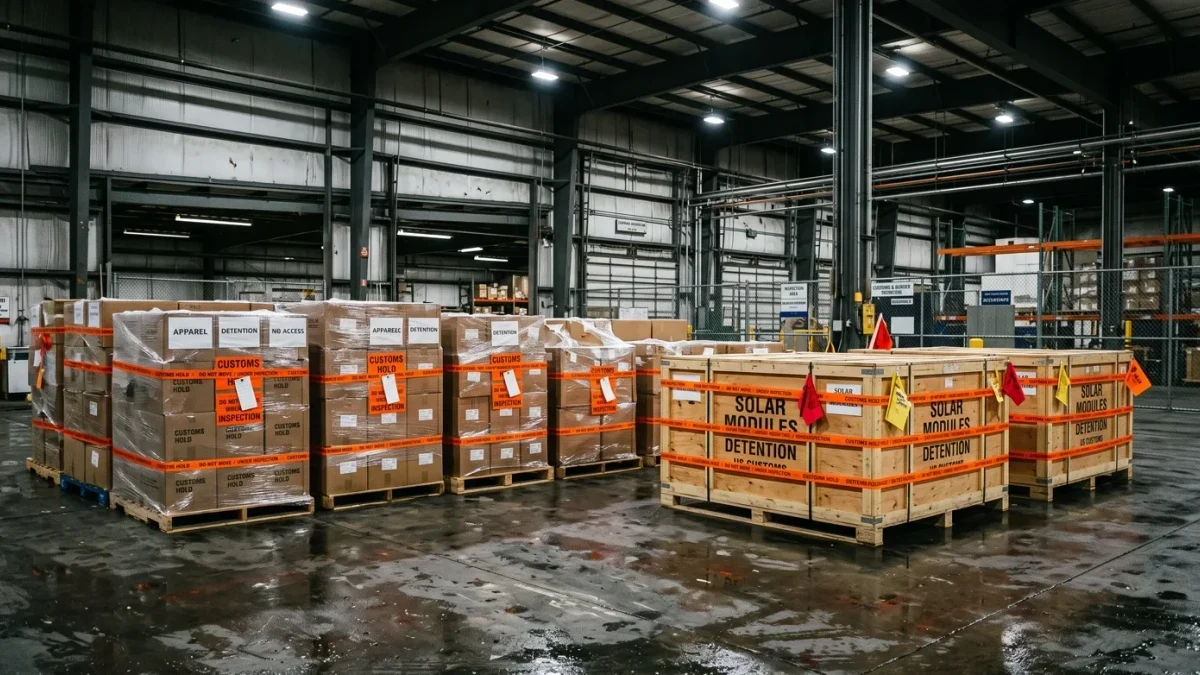
The Uyghur Forced Labor Prevention Act, in force since June 2022, presumes that goods mined, produced, or manufactured wholly or in part in the Xinjiang region of China — or by entities on a government list — were made with forced labor and cannot enter the United States. Customs and Border Protection enforces the presumption by detaining shipments at ports of entry, and importers lift it only with documented, auditable proof of their supply chain. Per CBP's published enforcement data, the agency had detained several thousand shipments worth over three billion dollars in aggregate by 2025, with solar-panel materials, apparel, and automotive parts leading the categories.
What law is this built on?
The UFLPA sits on top of Section 307 of the Tariff Act of 1930, which has barred imports made with forced labor for nearly a century. The older provision required enforcement agencies to prove forced labor; the 2021 act inverted that burden for Xinjiang. The presumption covers anything with Xinjiang nexus, including goods that only passed through other Chinese provinces or third countries for processing. A parallel Entity List maintained by the Forced Labor Enforcement Task Force names specific companies, making the presumption effectively permanent for their output.
What does an importer have to show?
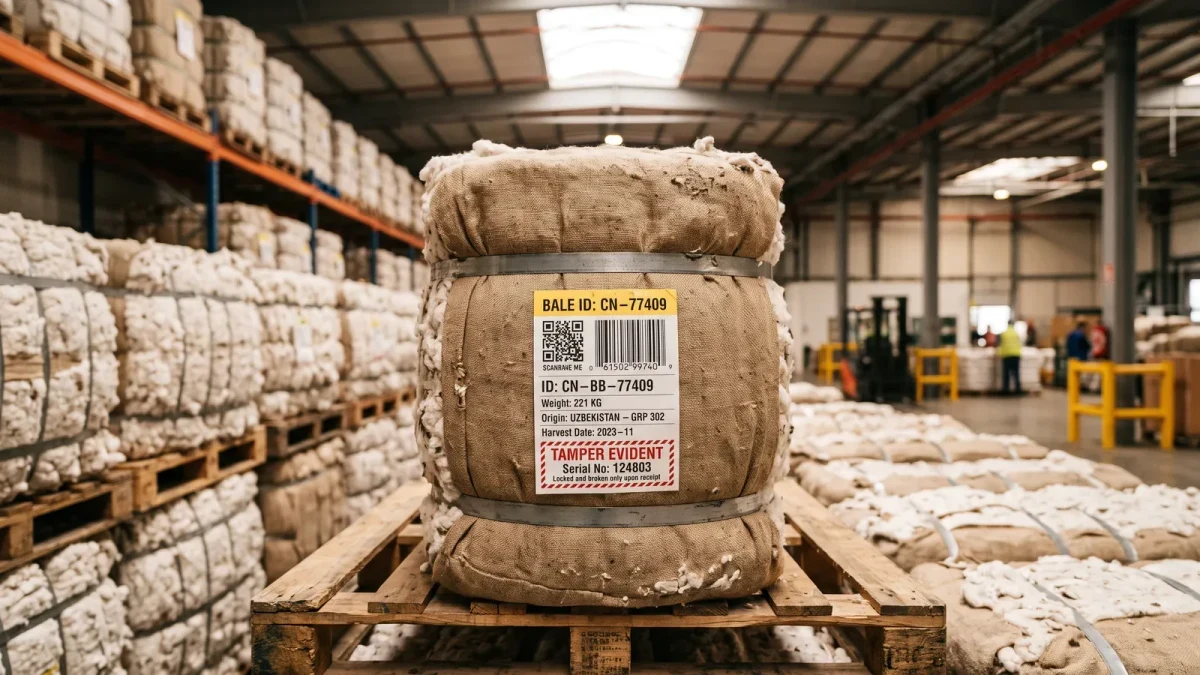
CBP publishes detailed guidance on what counts as clear and convincing evidence. The importer must trace inputs to their origin — purchase orders, invoices, production records, worker payroll and recruitment documents, and transport records — demonstrating that the goods and their components are free of Xinjiang nexus or that forced labor was absent. The agency specifically warns that supplier self-attestations and social-audit reports alone are insufficient, because auditing firms have been refused access or produced unreliable results in the region. Successful appellants have typically presented full chain-of-custody documentation; the majority of petitions fail, and CBP's quarterly reports show approval rates well below half.
Which industries carry the most exposure?
CBP's statistics consistently show three clusters: solar-grade polysilicon and panels, where Xinjiang produces a large share of the world's raw polysilicon; apparel and cotton goods, extending to any product with cotton that cannot be traced to non-Xinjiang origins; and automotive components, including aluminum and steel inputs after the entity list expanded in 2024 to include Chinese metals producers. Electronics with silica or rare-earth inputs face similar risk. The practical effect is that deep-tier sourcing — sub-suppliers two and three steps below the named vendor — determines whether a shipment moves.
What happens to detained goods?
Detention starts a clock. The importer can export the goods back, abandon them, or petition within the review window with the evidence described above. If the petition fails, the goods are excluded or seized, and repeated violations feed the enforcement task force's risk models, making future detentions more likely. Companies also face reputational and contractual spillover: customs records are the basis for journalistic and NGO supply-chain investigations, and several major disclosures since 2023 began with CBP entry data.
How are companies responding?
Trade records and corporate disclosures show three main strategies: re-sourcing raw inputs to verified suppliers outside the region, building traceability systems that track inputs from smelter or gin onward, and restructuring supply contracts to push documentation duties onto vendors — which auditors note can quietly move the compliance burden to firms least able to bear it. Some importers have also narrowed product lines, dropping goods whose inputs cannot be traced at acceptable cost. The law's design pushes in one direction: the importer of record owns the evidence problem regardless of where in the chain the opacity sits.
Is enforcement changing?
The statute required the enforcement task force to report to Congress and to expand the entity list on evidence from civil-society groups, journalists, and allied governments, and the list has grown repeatedly since 2022. CBP has also added laboratory testing — isotopic and fiber analysis for cotton and metals origin — to its toolbox, narrowing the space where paperwork alone settles a shipment. For human-rights purposes, the regime's significance is structural: it is the rare rights law that operates at the border, before goods reach shelves, with the burden placed on the party that profits.