An estimated four million Americans are barred from voting by felony-disenfranchisement laws, per the Sentencing Project's national analyses, and over a million and a half of them have fully completed their sentences — incarcerated no longer, on parole and probation done. Whether a person can vote depends on geography in a way few rights do: in Maine and Vermont, people vote from prison by absentee ballot; in roughly a dozen states, a felony conviction ends voting rights at least until every term of sentence, including fines, is complete; and in a few, the ban can last a lifetime. The disproportion is documented in the same dataset: Black adults are disenfranchised at several times the rate of the general population, with state rates reaching above one in ten Black adults in the strictest regimes.
Where did these laws come from?
Felony disenfranchisement predates the Civil War in common-law practice, but the state constitutional provisions adopted in the Jim Crow South in the 1890s and 1900s targeted Black voting explicitly — documented in the conventions' own recorded debates, which historians including those cited in the Sentencing Project's state profiles quote describing the intent to disenfranchise as many Black men as constitutionally possible. The Fifteenth Amendment blocked facial race discrimination; crime exceptions became the workaround. Courts have upheld the laws on that history anyway: under Richardson v. Ramirez (1974), the Fourteenth Amendment's section 2, which contemplates disenfranchisement for rebellion or other crime, permits the practice, and Hunter v. Underwood (1985) is the rare exception — striking Alabama's provision because its discriminatory intent and effect were proven on the specific record.
What has changed, and where?
The reform direction since the 1990s has run toward restoration: more than half the states have eased their rules by legislation, ballot measure, or executive order, per the National Conference of State Legislatures' tracking. Florida's Amendment 4 (2018), restoring rights to most people who completed their sentences, passed with two-thirds of the vote; its subsequent litigation over the statute conditioning restoration on payment of all court debt — upheld by the Eleventh Circuit — re-linked voting to fines and fees regimes. Virginia's governors have acted by restoration orders, each administration reversing or expanding the practice, and its state supreme court litigated the executive's authority. States including New Jersey, New York, and Minnesota have restored rights to people on parole or probation in recent sessions. The result is a live map: rules that change with legislatures and governors, mid-decade, with re-registration following.
What happens on the ground?
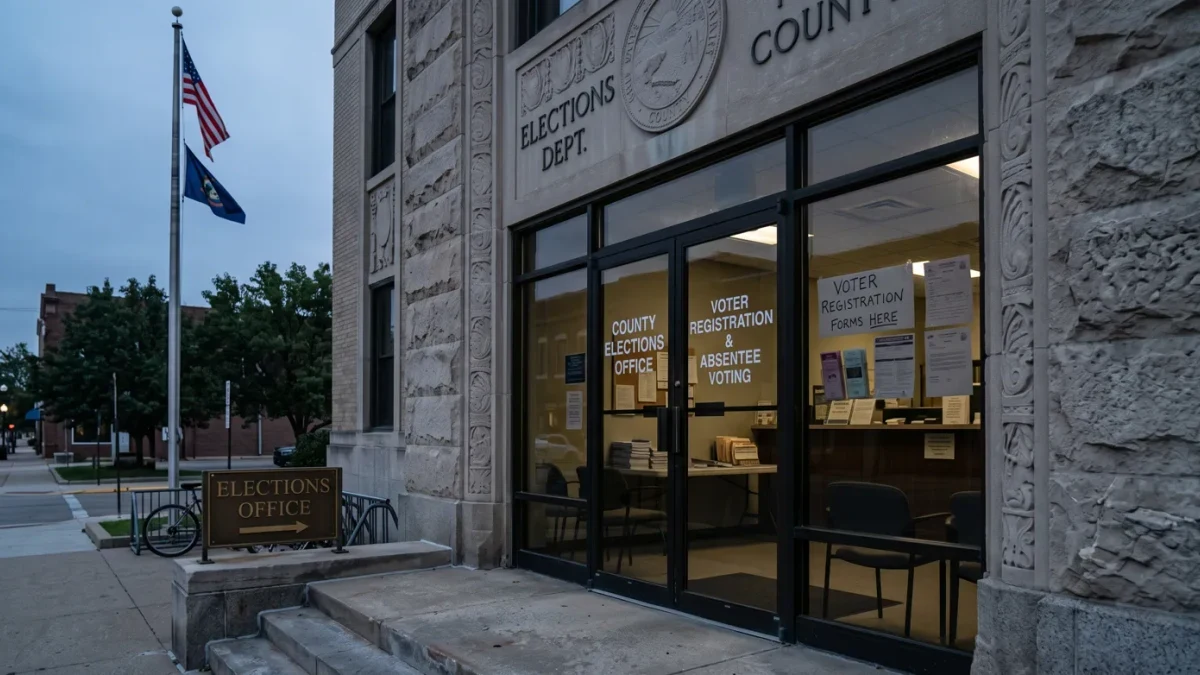
Confusion, documented by election-law researchers and litigation in multiple states: people uncertain whether their rights have been restored, election officials applying differing guidance, and — in a handful of high-profile prosecutions in recent cycles — people who voted while ineligible and were charged, sometimes for conduct they believed lawful. Advocacy organizations run re-registration campaigns and rights-lookup tools; several secretaries of state now maintain restoration notification systems of varying quality. The interaction with court debt in Florida produced its own cottage of rights-restoration charities paying fines to restore specific voters' eligibility, a mechanism critics compared to a poll tax and defenders called private philanthropy fixing a statute's rough edge.
Does restoring rights change anything measurable?
Research on the question is accumulating: studies of restoration in individual states have found increased civic participation among people re-enfranchised, and criminological research — including longitudinal work following reentry populations — associates voting with reduced reoffending, though causation is contested. The political-science finding is simpler: eligible-but-unregistered is the dominant status among people with records, so the practical gap between legal and actual participation is registration infrastructure, not just law.
What to watch in 2026
An election year foregrounds the map: litigation over restoration procedures, state legislation in session, and the administration of court-debt conditions are all live. The four-million figure moves with state law, not national — which means the number is not a fact of the system but a policy choice, distributed by statehouse, that can be read off each state's next session calendar.