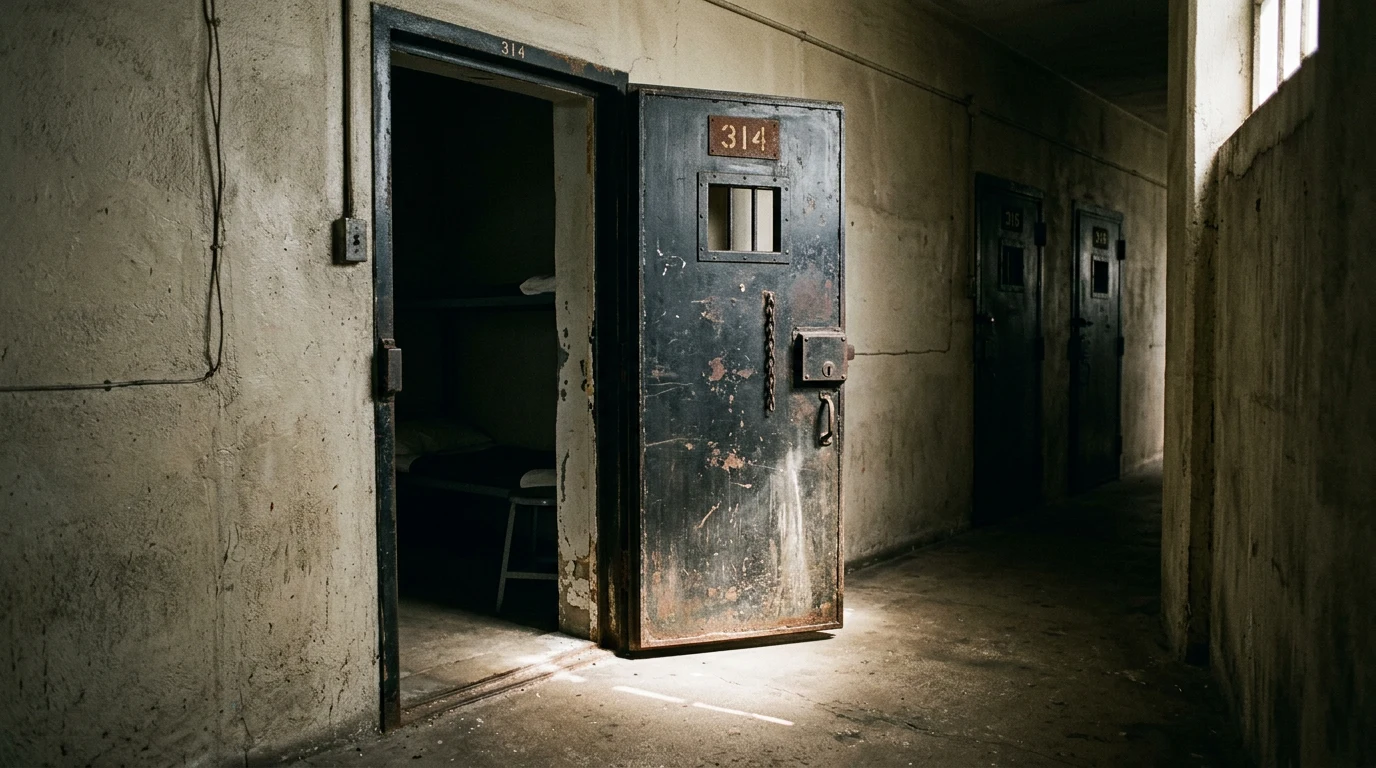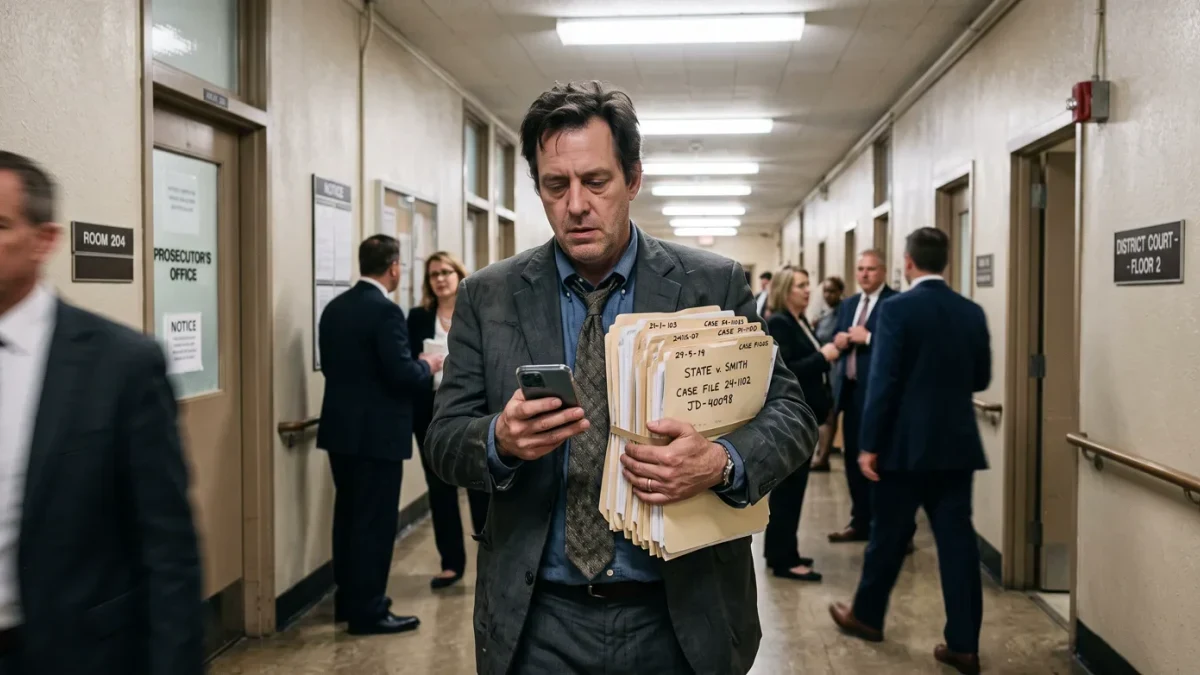
The American Bar Association's standards, relied on by courts and funding lawsuits around the country, say a full-time public defender should handle no more than 150 felony cases or 400 misdemeanors a year. Per the ABA's own national assessment and studies by the National Association of Criminal Defense Lawyers, defenders in many of the country's largest counties carry double or triple those loads, and some systems documented averages above a thousand misdemeanor cases per attorney annually. The arithmetic leaves minutes per client, and the people who pay for the difference are the ones the Constitution promised a defense.
What does the right to counsel actually require?
Gideon v. Wainwright (1963) guaranteed counsel to felony defendants too poor to hire it; Argersinger (1972) and Alabama v. Shelton (2002) extended the rule to any prosecution ending in actual jail. What the cases do not specify is quality: a lawyer who appears is constitutionally present, and courts have struggled to define ineffective assistance beyond the deliberately stingy test of Strickland v. Washington (1984), which requires showing both deficient performance and a probability the outcome would have differed. Overloaded defenders rarely fail the first prong formally, because the record shows they appeared, investigated some, and negotiated — the load itself is invisible in appellate review of individual cases.
How bad are the loads, in numbers?
Numbers exist where reporting exists. The ABA's 2004 and updated assessments counted systems far over standard; Louisiana's district-by-district reviews under its public defender board repeatedly documented attorneys tripling felony ceilings; Missouri and Indiana state commissions have published caseload dashboards for years; and research from the RAND-style evaluations of specific counties — most famously the studies of felony case processing in large urban systems — found attorneys meeting clients for the first time at arraignment in a large share of appointments. Rural systems present a different face of the same deficit: contract lawyers covering multiple counties with no investigators or mitigation specialists at all.
What difference does a defense actually make?
Randomized and quasi-experimental studies keep finding the same thing: representation quality moves outcomes dramatically. Evaluations comparing assigned counsel to staff defender offices, and bail-pilot studies providing full representation at first appearance, found detention rates, plea terms, and sentence lengths all improving with earlier and fuller defense — one frequently cited bail study found represented clients detained pretrial at a fraction of the rate of similar unrepresented ones. The mechanism is unglamorous: investigation, records requests, mitigation packets, and the time to file all of it. Caseload is the binding constraint on each of those tasks.
Why is the system underfunded?
Because its clients don't fund campaigns, and because the savings from underfunding are invisible while the costs are diffuse. Defender budgets compete with prosecution budgets in the same appropriations process, and prosecution brings police, victims' groups, and political attention. Several states have faced structural-intervention litigation — class actions arguing that systemic underfunding denies counsel wholesale — with mixed results: settlements in New York counties and Missouri produced infusion and oversight; other courts held that underfunding is a political question for legislatures. The structural litigation's own doctrine, from Luckey v. Harris onward, has been a decades-long argument over whether a system, rather than a case, can violate the Sixth Amendment.
What has improved, where?
The reform map includes state indigent-defense commissions with caseload standards and enforcement power, as in Texas's regional offices created after county scandals; first-appearance defender programs, now operating in dozens of jurisdictions after the pretrial-outcome evidence; and appropriation fights won in a few legislatures after data showed pretrial detention costs exceeded defense funding. The federal system's own defenders, with controlled caseloads, show the contrast: studies of federal appointments have long found public defender offices matching or outperforming private retained counsel in case outcomes. The standard exists; the gap is a funding choice — which is what the ABA's assessment concluded in every state it examined.