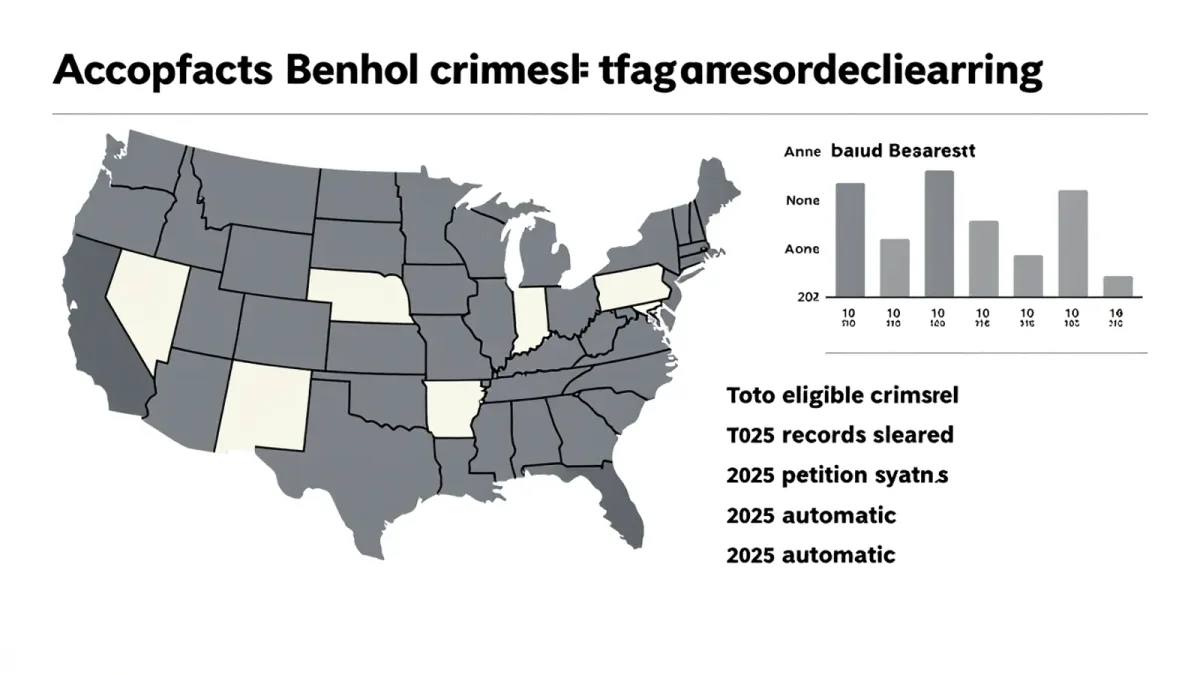
An estimated tens of millions of Americans have a criminal record visible on a routine background check — most of it arrests without convictions or minor convictions from decades past, per Bureau of Justice Statistics longitudinal data — and sealing or expungement is the legal mechanism that removes it. Per the University of Michigan law professor J.J. Prescott's research with Sonja Starr, which sampled state records: roughly 90 percent of people with records are statutorily eligible for some form of relief, yet only a small share obtain it, with take-up rates so low — commonly under 10 percent of the eligible — that researchers describe expungement law as a benefit delivered to those who navigate its paperwork rather than those it was written for.
What is the difference between sealing and expungement?
Extinguishment versus restriction. Expungement — rare outside a few states and juvenile courts — destroys or returns the record. Sealing, the commoner remedy, leaves the record in government hands but removes it from public view and most background checks; law enforcement and courts retain access, and certain licensing bodies can see sealed records under state-specific rules. Neither erases the fact of the case for purposes of later prosecutions, immigration proceedings, or firearm-permit checks, which consider conduct rather than visibility — a distinction attorneys spend entire consultations explaining.
How does the process work?
Traditionally, by petition: the person files a motion after a waiting period measured from conviction or case end, serves the prosecutor, and appears for a hearing where a judge weighs statutory factors — the offense's severity, subsequent record, rehabilitation evidence. Filing fees, certified records, and procedural defaults end many petitions; studies of the petition process found completion rates dropping at each procedural step. The reform generation automates: states including Pennsylvania — the 2018 pioneer — Michigan, California, Utah, and New Jersey now generate clean-slate sealing automatically for specified conviction and non-conviction records once eligibility dates pass, with court systems identifying eligible cases without any petition. Evaluations of Pennsylvania's and Michigan's automatic laws documented millions of cases sealed, with the qualifying populations skewed toward older cases — the exact population the petition system had failed to reach for decades.
What is a certificate of rehabilitation?
The third mechanism, for records that cannot be sealed: a court-issued finding of rehabilitation that restores licensing eligibility and serves as evidence against negligence claims for employers who hire. Illinois's and New York's certificate systems are the reference models, embedded in the licensing reforms that bar boards from denying licenses for unrelated convictions. The certificate approach concedes visibility and argues reliability — a strategy built for the serious-offense records that clean-slate laws exclude.
Does relief actually change outcomes?
The evaluation literature says yes, measurably. Prescott and Starr's Michigan cohort study — the cleanest design, comparing recipients to eligible non-applicants — found expungement recipients had higher employment and wages afterward and lower recidivism than matched non-recipients. Caveats apply — applicants self-select toward the motivated — but the direction is consistent across studies, and it inverts the public-safety argument against relief: the record's visibility, not the underlying conduct, predicted worse outcomes in the data. Employers, for their part, respond to clean records mechanically, since a sealed record returns no result at all.
What are the open problems?
The commercial databases. Records are compiled by private background-check companies from court bulk data and police blotters; sealing orders bind courts, not the companies that already sold the file. Updating lag runs months to years, and the Fair Credit Reporting Act's dispute machinery is the only lever individuals have — the same gap eviction-sealing statutes face. Federal recognition is the second: relief granted by a state does not bind federal immigration authorities, who may consider the conduct, and federal records have no state-level sealing path at all beyond pardons. The map, in other words, is generous on paper and porous at the edges where the databases and the federal government meet it.