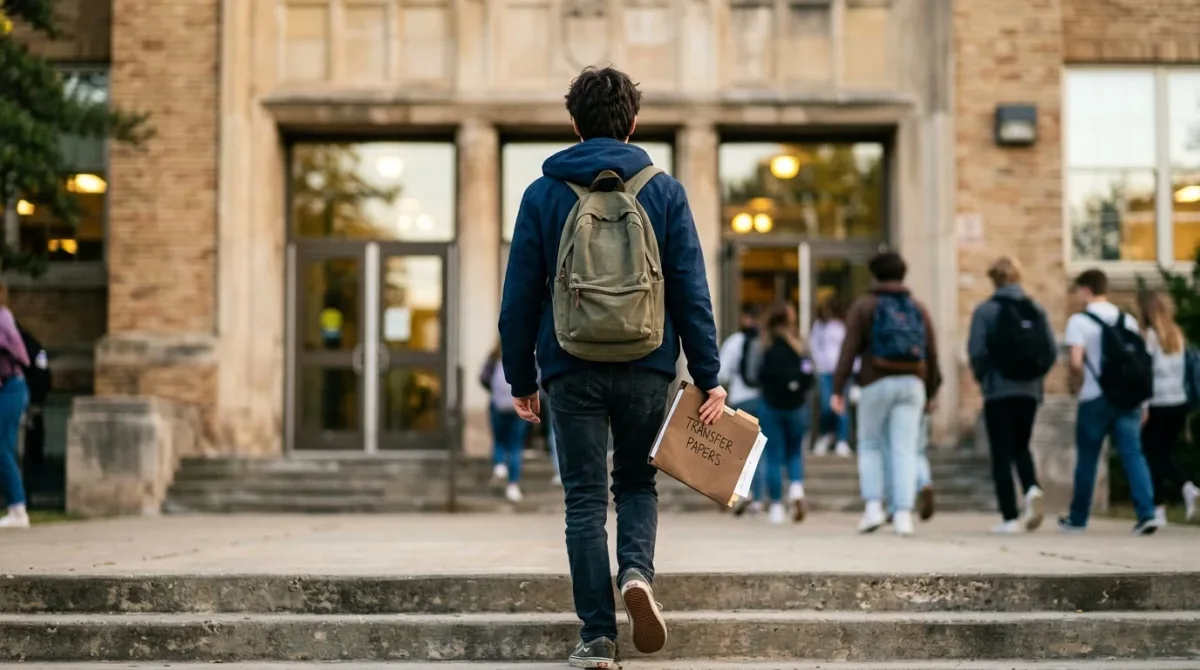
When a teenager leaves juvenile detention, federal law requires the facility to have already started planning how that student gets back into a classroom — but how smoothly it happens depends on the state, the district, and whether an adult keeps pushing. Facilities funded under the Second Chance Act must draft an individualized reentry plan within 60 days of a youth's detention, with education listed as a core piece alongside mental health and family support, according to the Office of Juvenile Justice and Delinquency Prevention (OJJDP).
How Does the Reentry Planning Process Actually Work?
Reentry planning is supposed to start almost as soon as a young person is detained, not in the final days before release. OJJDP, the federal agency that oversees juvenile justice programs, describes reentry planning as "comprehensive" and built around a multidisciplinary team — meaning education staff, case managers, and family members are all supposed to be at the table, not just corrections staff. The goal, per OJJDP, is to connect youth to "educational and vocational opportunities" alongside housing and employment help before they walk out the door.
In practice, the strength of that planning varies a lot by facility and by state, since juvenile justice systems are run at the state and county level, not by one federal agency. OJJDP points to Georgia's Department of Juvenile Justice as a model: the state assigns a dedicated education specialist to help each young person move toward "a return to high school or enrollment in postsecondary school or technical college" as their release date approaches. That kind of dedicated staffing is not guaranteed everywhere — families in other states may need to ask directly who at the facility is handling their teen's school transition.
Who Is Responsible for Getting a Teen Back Into School?
No single person owns this handoff, which is exactly why it can stall. Facility education staff, the receiving school's registrar or counselor, and a parent or guardian all play a piece, and reentry plans developed inside detention are meant to name who does what before release, according to OJJDP's description of the reentry planning requirement. When a facility has an education specialist, as in the Georgia model, that person becomes the point of contact who works both sides — the detention program and the school the student is returning to.
Where that role does not exist, the burden tends to fall on the family to initiate contact with the new or former school, request the transfer of records, and confirm an enrollment date. Because state laws on timelines for school transfers differ, it's worth asking the reentry team, before release, exactly which adult is tracking the student's return to class — and getting that answer in writing if possible.
It also helps to ask early whether the reentry plan names a specific school, or leaves that decision open until closer to release. A plan that identifies the receiving school by name, along with a target enrollment date, is easier for a family to hold staff accountable to than a plan that only says "education services will be arranged."
Does "Back to School" Always Mean the Same School?
Not always, and that's by design in some states. The Georgia model that OJJDP highlights frames the goal broadly — "a return to high school or enrollment in postsecondary school or technical college" — rather than assuming every teen goes back to the exact classroom they left. For an older teen close to graduation, or one who was already behind on credits before detention, a technical college program or a GED pathway may get them to a diploma or credential faster than reentering a traditional high school schedule.
That range of options is worth asking about directly. A facility's education specialist, where one exists, should be able to lay out more than one route — traditional high school, an alternative school within the district, or a postsecondary or technical program — rather than defaulting to whichever option is easiest to arrange on short notice. Families and older students have standing to ask which path actually fits the credits already earned and the time left before a realistic graduation date.
How Many Young People Are In This Situation Each Year?
This is not a small population. The number of youth held in residential juvenile placement facilities on a given day rose from 24,900 in 2021 to 29,300 in 2023, according to OJJDP's Statistical Briefing Book, which tracks national juvenile justice data. Separately, OJJDP estimates that roughly 25,000 youth are in residential placement on any given day and require some form of community transition support as they cycle back out. Nearly all of them will eventually need a school, or an alternative education pathway, waiting on the other side.
OJJDP and the National Institute of Justice — the Department of Justice's research arm — jointly fund research and data collection on this population, including through the Statistical Briefing Book, so families and school staff have a public source for how large and how persistent this need is nationally, separate from any one district's numbers.
What Can a Parent or Guardian Do to Help?
You don't have to wait for the system to reach out first. Ask the facility's staff, as early as possible, three things: who is drafting the education portion of the reentry plan, what school records need to transfer, and what the target enrollment date is. If your teen's file mentions an education specialist or case manager, treat that person as your main point of contact rather than working the school system on your own.
It also helps to contact the receiving school directly, even before release, to ask what documents they need and whether the district has a re-enrollment coordinator for students returning from juvenile justice placement — some districts do, many do not. If nothing happens automatically, a phone call from a parent asking "what is the plan, and who owns it" is often what moves the process. Federal guidance treats education continuity as a required part of reentry, not an optional extra — that gives families a legitimate basis for asking facility staff to show the plan in writing.
The Bottom Line
The pathway back to school after juvenile detention is supposed to be planned, not improvised — federal reentry rules say so, and states like Georgia show what dedicated staffing can look like. But with tens of thousands of young people moving through residential placement each year, families who ask specific questions early, and get answers in writing, are in the best position to make sure the plan on paper turns into a seat in a classroom.
For a related family perspective, read What Parents Should Know About Chronic Absenteeism.
For more context, read What bail is, and how a judge decides whether to set it.
For more context, read The Wanted List That Isn't Quite a Warrant.